top of page


A NOTE FROM NATALIE
Let food support you.
A gentler beginning, with enough structure to make it practical.
When life changes, the way we nourish ourselves sometimes needs to change with it. I want this program to feel like a hand on your shoulder and a little help in your kitchen.
My approach is simple: real ingredients, meals worth sitting down for, and portions that work with your needs. There is room for warmth, pleasure and a life beyond the kitchen.
Over these five days, we will put protein on the plate, make vegetables easy to enjoy and become more aware of how the whole day adds up. Calories are a useful guide; they are one part of the picture.
For women moving through midlife, caring for ourselves can mean learning a new rhythm. This is a place to begin, then build on with individual support when you need it.
You deserve to feel nourished in the life you have now.
With love,
Natalie
ON THIS PAGE
Jump to a section
03-05
01
YOUR STARTING POINT
The approach, your calorie guide and how to check the numbers
11-22
04
THE RECIPES
Nine main meals and two snacks
06-08
02
YOUR MENU
Five days of simple meals, with calories and protein
23-25
05
MAKE IT YOURS
Portion swaps, your check-in and next step
09-10
03
SHOPPING
Produce and pantry lists
26
06
GOOD TO KNOW
Notes, sources and references
YOUR STARTING POINT
A reset in your daily rhythm.
A practical foundation for food, movement and consistent self-care.
NOURISH
Build meals with protein, colourful vegetables, fibre-rich carbohydrate and a measured amount of fat. These recipes use naturally gluten-free ingredients and no dairy or refined sugar.
STRENGTHEN
Keep a source of protein in each main meal. Pair nourishing food with movement and strength activity that suits your ability and health.
RENEW
Prepare a little ahead. Give meals your attention. Keep regular sleep and hydration habits. Notice what makes everyday care easier to repeat.
About the name.
Metabolic Reset describes a fresh start in habits, not a medical treatment or a way to switch metabolism on. No single food or five-day plan guarantees faster metabolism, hormone changes or weight loss. [1, 2]
Use the guide flexibly. It is designed for generally healthy adults. Choose an individual energy target with a qualified clinician when needed, and adapt for activity, appetite and medical requirements.
YOUR CALORIE GUIDE
Know your daily allowance.
Choose a suitable personal target first; then fit meals, snacks and drinks within it.
CHECK BEFORE YOU COUNT
Test the calories in your kitchen.
The figures are useful estimates. Your ingredients and your portion determine the final number.
01
Weigh ingredients in grams. Match the stated condition: raw meat, cooked quinoa or rice, and drained canned foods. Weigh edible portions without shells, bones or peel where specified.
02
Use the nutrition label for your actual product. Soy milk, tofu, canned foods and packaged ingredients can differ substantially from generic database entries.
03
Add up the full recipe, including oil, tahini, nuts, sauces and toppings. Include every ingredient that contributes energy.
04
Divide by the number of equal serves. For soup, hummus or other batches, weigh the cooked batch and portion it evenly. Water loss changes weight, not the total energy of retained ingredients.
05
Add every serve and drink to your daily total. If you swap an ingredient, change a portion or add something, recalculate before assuming the printed total still applies.
A SIMPLE CALCULATION
Ingredient kcal = grams used × label kcal per 100 g ÷ 100.
Recipe kcal per serve = total recipe kcal ÷ equal serves.
Daily kcal = breakfast + lunch + dinner + snacks + drinks + extras.
Calories shown are calculated estimates, not laboratory-tested results. Generic Australian food-composition values underpin the guide; check your actual brands and finished recipes before publishing or prescribing. [4]
YOUR MENU | DAYS 1-3
Five days of simple meals.
One adult; all listed snacks included. Water, plain tea and black coffee add negligible energy.
B breakfast | L lunch | D dinner | S snack. All figures are estimates.
YOUR MENU | DAYS 4-5
Keep the rhythm going.
Check your chosen daily allowance before adding drinks, toppings or extra food.
A LITTLE PREPARATION
Set yourself up gently.
A small amount of preparation makes the week much easier to follow.
01
Cook grains in water. You need 1,040 g cooked quinoa and 125 g cooked brown rice for the five days. Buy about 400 g dry quinoa; cooked yield varies, so weigh the portions after cooking.
02
Portion and cool grains promptly. Refrigerate the first 2-3 days of quinoa; freeze later portions straight away. Thaw day 4 and 5 portions in the fridge the day before use. Cook rice fresh on day 3 or freeze it promptly.
03
Make one chia bowl the night before day 1 and the second on day 3. Wash and dry salad leaves; cut only the first two days of vegetables now.
04
Cook the two-serve soup on day 2. Refrigerate the second equal portion promptly for day 3 dinner. Cook fish, eggs and the day 4 chicken fresh.
05
Make the four-portion hummus batch on day 2. Refrigerate one portion for that day and freeze the other three promptly. Thaw one for day 5; save two for another week.
KEEP IT SAFE
Refrigerate leftovers within 2 hours, using shallow containers. Keep below 5°C; use leftovers within 3 days and cooked rice within 2 days. Thaw frozen portions in the fridge and use within 24 hours. Reheat until steaming hot. Keep raw chicken and fish separate from ready-to-eat food. [5]
YOUR SHOPPING LIST | PRODUCE
Fresh, simple ingredients.
For the example five-day menu and the full four-portion hummus batch.
Quantities are rounded up for shopping. Fruit size and edible yield vary. Wash produce well and refresh cut vegetables midweek. Seasonings, extra drinks and additional food for higher energy needs are separate.
YOUR SHOPPING LIST | PANTRY
The rest of your basket.
Check ingredient lists for gluten, dairy and added sweeteners.
Keep the label. Plain, unsweetened soy milk and firm tofu vary in energy and protein. Use the actual product panel to confirm your recipe totals. Almond or coconut milk is not a protein-equivalent swap.

BREAKFAST
Berry + chia
breakfast bowl
460
kcal / serve
21 g
protein / serve
SERVES
ALLOW
1
10 min + overnight
INGREDIENTS
250 g unsweetened calcium-fortified soy milk (about 250 ml)
25 g chia seeds
100 g cooked quinoa
80 g blueberries
10 g sliced almonds
1 g ground cinnamon
METHOD
01
Stir soy milk, chia and cinnamon in a covered container. Wait 10 minutes, stir again, then refrigerate overnight.
02
Spoon into a bowl and top with quinoa, blueberries and almonds. Add a splash of water if you prefer a softer texture.
03
Make the second planned serving fresh on day 3 for day 4. Use thawed berries if you prefer; follow the packet cooking instructions for frozen berries.
Protein, fruit and fibre in one bowl. Contains soy and almonds. Soy-milk calories are a generic database estimate; check your unsweetened brand.
BREAKFAST
Eggs, greens +
golden potatoes
370
kcal / serve
25 g
protein / serve
SERVES
ALLOW
1
25 minutes

INGREDIENTS
3 eggs (150 g without shells)
180 g potato, diced
60 g baby spinach
100 g cherry tomatoes, halved
5 g olive oil (about 1 tsp)
5 g parsley; black pepper
METHOD
01
Heat oven to 200°C conventional / 180°C fan. Toss potato with the measured oil and pepper. Roast for 20-25 minutes, turning once, until tender.
02
Wilt spinach with tomatoes and a splash of water in a non-stick pan.
03
Poach, boil or pan-cook the eggs without extra oil. Serve all three eggs with vegetables and potato. Cook eggs until whites and yolks are firm for higher-risk readers.
A substantial breakfast for days 2 and 5. The recipe and calorie guide include three eggs, potato and the measured oil. Contains egg.

BREAKFAST
Golden tofu
breakfast bowl
465
kcal / serve
33 g
protein / serve
SERVES
ALLOW
1
15 minutes
INGREDIENTS
200 g firm tofu, drained and crumbled
120 g cooked quinoa
60 g baby spinach
100 g red capsicum, diced
5 g olive oil
5 g fresh coriander
METHOD
01
Warm oil in a non-stick pan. Add capsicum and a splash of water; cook for 3-4 minutes.
02
Add tofu and, if you like, a pinch of turmeric and black pepper. Cook for 4-5 minutes, until hot. Fold through spinach to wilt.
03
Serve with quinoa, heated until steaming hot, and coriander. Turmeric and pepper are optional trace seasonings and are not included in the calorie estimate.
An easy savoury plant-based breakfast. Contains soy. Calcium content varies by tofu brand, so choose calcium-set tofu when available.
LUNCH
Lemon chicken +
quinoa salad
445
kcal / serve
48 g
protein / serve
SERVES
ALLOW
1
20 minutes

INGREDIENTS
1 70 g raw skinless chicken breast
180 g cooked quinoa
50 g baby spinach
100 g cucumber, sliced
100 g cherry tomatoes
5 g olive oil
20 g lemon juice
10 g parsley
METHOD
01
Brush chicken with half the measured oil. Cook in a non-stick pan for about 5-7 minutes each side, until the thickest part reaches 75°C. Rest, then slice.
02
Arrange quinoa, spinach, cucumber and tomato in a bowl.
03
Whisk remaining oil with lemon and pepper. Dress the salad, then add chicken and parsley. If packing ahead, cool the chicken promptly and keep dressing separate.
A practical lunch with protein, vegetables and a measured grain portion. Raw chicken weight is used for the nutrition calculation.

LUNCH
Tuna + bean lunch
bowl
500
kcal / serve
46 g
protein / serve
SERVES
ALLOW
1
10 minutes
INGREDIENTS
120 g canned tuna in water, drained
120 g canned kidney beans, drained and rinsed
120 g cooked quinoa
100 g cucumber, diced
100 g cherry tomatoes
50 g cos lettuce
5 g olive oil
20 g lemon juice
10 g parsley
METHOD
01
Put lettuce, quinoa, beans, cucumber and tomato into a bowl.
02
Flake tuna over the top. Stir lemon juice, oil and pepper together, then drizzle over.
03
Finish with parsley. Keep chilled until ready to eat. Store unused canned ingredients in covered containers and follow their label directions.
A no-cook lunch for a busy day. Contains fish. Choose plain tuna and beans without added sauces or sugar.
LUNCH
Ginger tofu +
brown rice bowl
600
kcal / serve
38 g
protein / serve
SERVES
ALLOW
1
20 minutes

INGREDIENTS
200 g firm tofu, drained and cubed
125 g cooked brown rice
150 g broccoli florets
80 g carrot, cut into matchsticks
5 g olive oil
10 g fresh ginger, grated
20 g lemon juice
15 g spring onion, sliced
METHOD
01
Steam broccoli and carrot until tender-crisp. Heat rice until steaming hot.
02
Warm the measured oil in a non-stick pan. Cook tofu until lightly golden and heated through. Add ginger and a splash of water for the final minute.
03
Arrange rice and vegetables in a bowl. Add tofu, lemon juice and spring onion. No bottled sauce is needed.
A simple plant-based lunch with a defined rice portion. Contains soy. Increase vegetables for extra volume; recalculate any added oil or sauce.

DINNER
Lemon salmon
tray bake
585
kcal / serve
41 g
protein / serve
SERVES
ALLOW
1
30 minutes
INGREDIENTS
150 g raw Atlantic salmon fillet
200 g peeled sweet potato, cubed
180 g broccoli florets
5 g olive oil
20 g lemon juice
5 g parsley; black pepper
METHOD
01
Heat oven to 200°C conventional / 180°C fan. Toss sweet potato with half the oil and roast for 15 minutes.
02
Add salmon and broccoli to the tray. Brush with remaining oil, then add lemon juice and pepper.
03
Bake a further 12-15 minutes, depending on fish thickness, until fish is opaque and flakes easily and vegetables are tender. Finish with parsley.
One tray, very little washing up. Contains fish. Calories include the full measured amount of oil and all listed vegetables.
DINNER
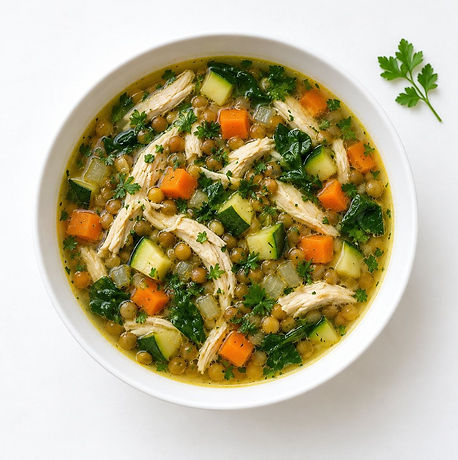
Chicken + lentil
comfort soup
485
kcal / serve
57 g
protein / serve
SERVES
ALLOW
1
35 minutes
INGREDIENTS
340 g raw skinless chicken breast, diced
400 g cooked, drained green lentils
200 g carrot, diced
250 g zucchini, diced
100 g onion, diced
100 g spinach
10 g olive oil
6 g garlic, chopped
10 g parsley
20 g lemon juice
METHOD
01
Warm oil in a saucepan. Soften onion, carrot and garlic for 5 minutes, adding a splash of water if needed.
02
Add chicken, zucchini, lentils and 800 ml water. Simmer for 15-20 minutes, until chicken is cooked through to 75°C and vegetables are tender.
03
Stir in spinach, parsley and lemon. Add pepper to taste. Divide the finished batch into two equal portions. Chill promptly; reserve one for day 3 dinner if cooked on day 2.
Use water, not uncounted stock, for the stated calories. A hearty meal rather than a broth-only dinner. Contains no dairy or grain ingredients.

DINNER
Herb lamb + lentil
salad
560
kcal / serve
54 g
protein / serve
SERVES
ALLOW
1
20 minutes
INGREDIENTS
170 g raw lean lamb eye of loin, visible fat removed
150 g cooked, drained green lentils
120 g cooked quinoa
50 g baby spinach
100 g cucumber
100 g cherry tomatoes
5 g olive oil
20 g lemon juice
10 g parsley
METHOD
01
Brush lamb with half the oil and season with pepper. Grill over medium-high heat for 3-5 minutes each side, depending on thickness and preferred doneness. Rest for 5 minutes.
02
Toss lentils and quinoa with spinach, cucumber, tomato and parsley. Add remaining oil and lemon juice.
03
Slice lamb over the salad. For higher-risk readers, cook meat thoroughly rather than serving pink.
A simple alternative to chicken or fish. The calorie calculation uses lean raw lamb; untrimmed cuts and larger portions change the result.
SNACK 01
Apple, almonds + soy milk
A measured snack to enjoy together or split across the day.
280
kcal per serve
11 g
protein
ONE SERVE
150 g apple, edible portion
15 g almonds
200 g unsweetened calcium-fortified soy milk (about 200 ml)
METHOD
01
Enjoy the apple with measured almonds and a glass of soy milk. Serve together or split between morning and afternoon.
02
Use your actual soy-milk label to check energy; a generic fortified soy beverage is used here.
Contains almonds and soy. Almond milk is not a protein-equivalent swap; recalculate energy and protein if you change the drink.
SNACK 02
Lemon hummus +
vegetable sticks
Make four equal snack portions. The menu uses two; freeze the other two for another week.
115
kcal / serve
5 g
protein / serve
INGREDIENTS | FOUR SERVES
240 g canned chickpeas, drained
15 g tahini
5 g olive oil
20 g lemon juice
5 g garlic
100 g carrot, cut into sticks
100 g cucumber, cut into sticks
METHOD
01
Blend chickpeas, tahini, oil, lemon and garlic with enough water to make a creamy hummus.
02
Weigh the finished hummus and divide into four equal portions. Serve each with one quarter of the carrot and cucumber.
03
Refrigerate promptly and use within 3 days; freeze any portion needed later.
Contains sesame. The nutrition guide is for one quarter of the hummus batch plus one quarter of the vegetables. Freeze the two spare hummus portions for another week.
MAKE PORTIONS WORK FOR YOU
Keep the whole day in view.
Use these small adjustments to fit an agreed calorie allowance; recalculate protein and extras too.
YOUR FIVE-DAY CHECK-IN
Awareness, without judgement.
A few numbers and a few observations can tell a more useful story together.
YOUR NEXT STEP
Make this your beginning.
Keep the recipes that work, and build the next week around them.
A meal you enjoy.
A portion that suits you.
A rhythm you can repeat.
Choose two breakfasts, two lunches and two dinners to repeat. Keep a short shopping list and allow room for your life, your preferences and your season.
If you would like help finding an appropriate calorie target, adapting meals or making your kitchen easier to use, we can talk about the support that fits you. Clinical nutrition needs should be assessed by an Accredited Practising Dietitian or your healthcare team.

NOTES + SOURCES
A clear and useful guide.
What the numbers mean, and where the information comes from.
Recipe estimates. Energy and protein were calculated ingredient by ingredient using FSANZ Australian Food Composition Database Release 3. Energy with dietary fibre was converted from kJ to kcal by dividing by 4.184. Ingredients are edible raw weight unless cooked, drained or otherwise specified. All measured oil is counted. Optional trace seasonings are excluded. Calories are rounded to the nearest 5 kcal; protein to the nearest gram. Daily totals sum those rounded recipe figures. [4]
Verify before use. These are calculated estimates, not laboratory-tested meals. Recipes have not been kitchen-tested. A generic fortified soy beverage is used as a proxy for unsweetened soy milk; actual brands can differ, as can tofu, egg size and cooked yields. Check labels, weigh finished batches and update figures for any substitution. Photographs are AI-created illustrations, not portion measurements.
Individual needs. This educational guide is for generally healthy adults. It is not a therapeutic diet or an individual calorie prescription. Seek advice before restricting energy during pregnancy or breastfeeding, with an eating-disorder history, kidney disease, diabetes medication or other medical needs. Check all allergen labels; recipes include egg, fish, soy, sesame and almonds. For coeliac disease, verify ingredient certification and avoid cross-contact.
bottom of page